Bioinformatics Café: Building Community and Bridging Computing and Biology
Sophie Dorros
Feb 27, 2026
The Bioinformatics Café is a monthly, hands-on meetup hosted by the Center for High Throughput Computing (CHTC), which is supported by both the UW-Madison and the Morgridge Institute for Research. At the Café life-science researchers come together to learn, co-work, and troubleshoot with support from expert facilitators. Whether you’re brand new to high throughput computing or a seasoned user, the Café offers a space to build skills, refine workflows, and connect with fellow researchers solving similar problems.
“If you have a problem that is data heavy, even if you have never done compute in the past, come talk to us. We want to connect with you. We want to meet you where you’re at. We want to have that community. We want to have that conversation with you to know what we can do.” - Danny Morales, CHTC Research Computing Facilitator.
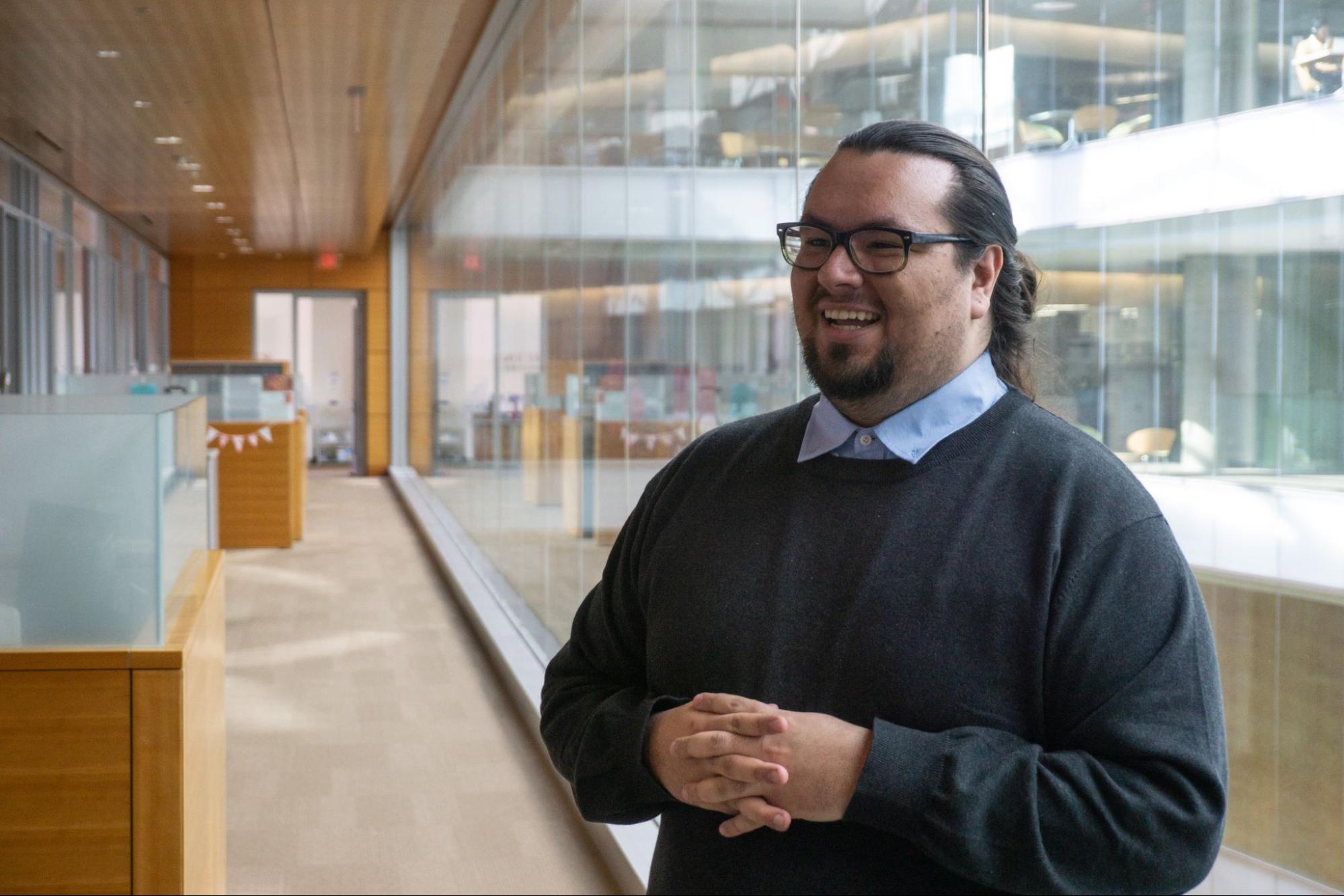
When computational biologist turned CHTC research computing facilitator Danny Morales arrived at the University of Wisconsin-Madison, he noticed a lack of connection between biologists and the CHTC. “When I got here, I was like, oh, this is such an amazing place where CHTC really does want to help researchers push borders and remove those barriers. And one of the barriers that I found was that lack of community.” Morales sought to find a way to create a community space to connect students and faculty across UW-Madison’s vast number of different biology departments, spread out across various colleges, departments and affiliates.
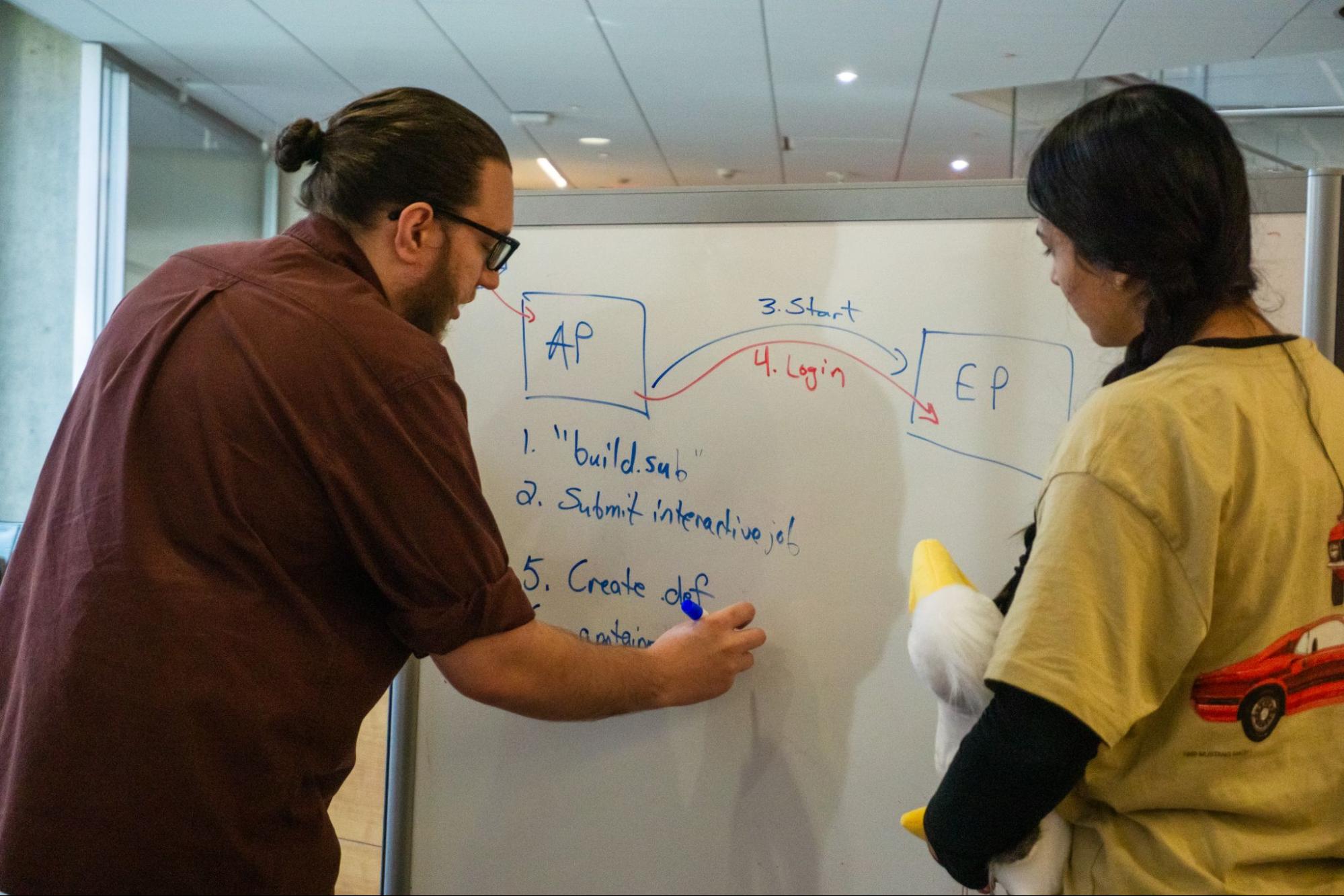
In the quickly evolving world of bioinformatics, Principal Investigators (PI’s) and postdocs may find themselves unable to provide students with the tools necessary to solve their data-heavy biology projects. Here is where the Bioinformatics Café comes in. Users can come in with any level of experience, whether they have specific data or are just beginning to work on a research question, and attend clinics or tutorials, and obtain support from CHTC facilitators, Morales notes.
Morales joined CHTC from Florida International University (FIU), where he earned his BA, MS, and PhD in Biology. He first became involved with bioinformatics in a graduate lab studying mosquito viruses, where he found himself in need of a lot more computing power than what was available. A colleague pointed Morales to the OSG Consortium, a NSF-funded, collaborative organization that advances scientific research by providing shared, distributed high-throughput computing (dHTC) and data capacity. After Morales attended the OSG School and joined the OSPool, quickly submitting 50 million jobs and earning himself “the proud place at one point as a top user of the OSPool.”
After joining CHTC and inspired by fellow CHTC Facilitators Tim Cartwright and Christina Koch’s Campus Meetups and Cuban Coffee with other biologists at FIU, Morales pitched the idea for the Bioinformatics Café for the UW-Madison campus, and it has continued to meet on a monthly basis since then. At the Café meetings, attendees can expect to receive a mini tutorial in various topics, followed by a 1-on-1 check in with facilitation team members. Users can then participate in co-working with facilitators and fellow bioinformaticians on hand for troubleshooting, an optional show and tell, and finally peer networking with other researchers. CHTC Facilitation Team, credits: Wisconsin Engineering Magazine
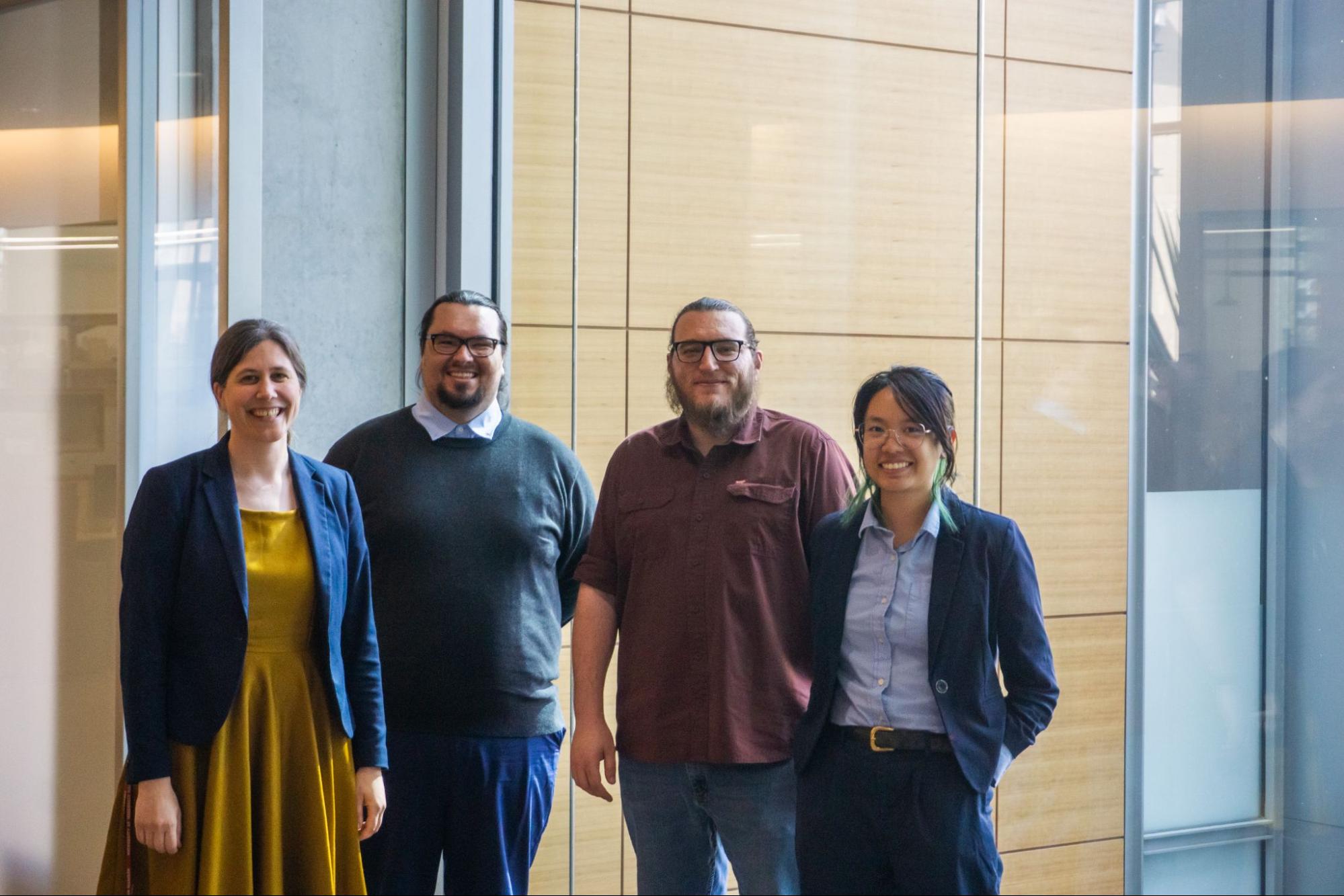
The Café is not only a space for users to troubleshoot their own research work, but also build connections with both the CHTC and other researchers who may be tackling similar challenges. Café participants range from UW Madison post graduate, graduate, and undergraduate students, to current Morgridge Institute for Research staff, all using Bioinformatics and high-throughput computing to overcome barriers in bioinformatics-based research.
One Bioinformatics Café attendee, UW-Madison postdoctoral researcher Izabella Sall from the O’Leary Research Group, joined the Café to seek help in jumping from her old high-computing system to a new high-throughput computing one. Sall remarked: “In just five months as a postdoctoral fellow at UW-Madison, the Bioinformatics Café has been an indispensable resource for jumpstarting my research, particularly in streamlining my transition from high-computing to high-throughput computing. The facilitators are exceptionally knowledgeable and provide thoughtful, one-on-one support that has saved me substantial time in data processing and analysis. I especially value the balance they strike between hands-on guidance and fostering independence, which has been critical to my growth using CHTC resources to progress my research.”
The Bioinformatics Café meets on the second Wednesday of every month in Morgridge Hall, Room 3610. The next meeting will be March 11th in Morgridge Hall, where CHTC Facilitators will present a tutorial on installing and managing bioinformatics software using Conda and containers on CHTC. No pre-registration is required, and more information on future CHTC Bioinformatics Café meetings can be found here.